




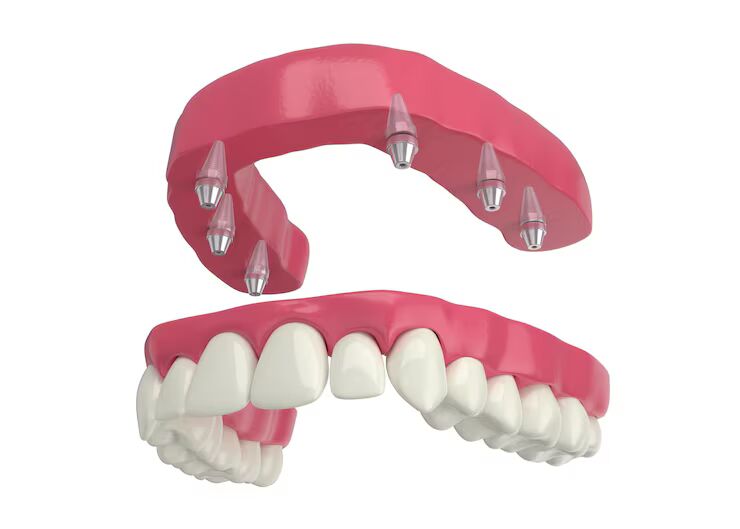
All-on-4 dental implants are an option for replacing most or all of the teeth in one arch. Four implants, rather than several, can support a fixed set of replacement teeth for multiple missing teeth. This option could be employed in the instance of numerous missing teeth, severely damaged teeth, or teeth that cannot be restored. By knowing how all-on-4 works, you can prepare yourself. It is essential to have a dental evaluation to check the gums, jawbone, and oral health. A thorough examination for dental implants in Davie can provide an idea of whether one is a suitable candidate.
What Are All-on-4 Dental Implants?
All-on-4 uses four dental implants to support a full arch of replacement teeth. The implants are placed into the jawbone, where they act as support for a fixed dental arch.
The treatment may offer an option for someone who needs to replace many teeth but does not want separate implants for every missing tooth.
How Does All-on-4 Work?
The process usually involves several steps:
- The mouth and jawbone are examined.
- Imaging may be used to assess bone levels and implant placement.
- Four implants are placed in selected areas of the jaw.
- A temporary set of replacement teeth may be attached, depending on the treatment plan.
- After healing and the required follow-up care, a final set of teeth may be placed.
The exact plan can vary based on bone condition, oral health, and the type of restoration selected.
How Many Implants for a Full Arch?
People often ask how many implants are needed to replace a full arch of teeth. With All-on-4, four implants support a full set of replacement teeth. This is different from using separate implants for each missing tooth.
Not every person will be a candidate for this approach. Bone levels, gum health, medical history, and other factors need to be reviewed before treatment.
All-on-4 vs Traditional Implants
The main difference between all-on-4 and traditional implants lies in how they are used.
With traditional dental implants, separate implants may be used to replace individual missing teeth. Replacing a full arch may need more implants, depending on your jawbone and treatment plan.
All-on-4 uses four implants as a base for a fixed set of replacement teeth. The most suitable treatment may depend on the number of missing teeth, the condition of your jawbone, your oral health, and your individual needs.
A dentist in Davie can assess these factors and explain which approach may fit the individual situation.
What Are the Benefits of All-on-4?
All-on-4 may provide several practical benefits for suitable candidates:
- A fixed replacement for a full arch
- Fewer implants than some full-arch treatment plans
- Replacement of several missing teeth with one connected restoration
- Support for everyday activities such as eating and speaking
- A treatment plan designed around the condition of the jaw and remaining oral structures
Results and treatment needs can vary, so an individual assessment is important.
Find Out if All-on-4 May Be Right for You!
Replacing most or all teeth in an arch involves more than choosing a set of replacement teeth. The condition of the gums, jawbone, bite, and remaining teeth can all affect the treatment plan. Regency Square Dental can assess these factors and explain how All-on-4 implants may support a fixed full-arch restoration. An appointment can also help clarify the treatment stages, healing time, temporary teeth, and final restoration. Book a consultation to discuss your full-arch tooth replacement needs and learn what treatment options may be suitable.
FAQs
How long does the All-on-4 procedure take?
Putting in the implants may take a few hours. The full treatment takes longer because you also need time for planning, healing, and getting your final teeth. The total time depends on your oral health and treatment plan.
Is All-on-4 cheaper than traditional implants?
The cost varies based on the number of teeth being replaced, materials, imaging, extra treatments, and the type of restoration. All-on-4 may involve fewer implants for a full arch, but the total cost cannot be determined solely by the number of implants.
Do All-on-4 implants need bone grafting?
Not always. The implant positions may be planned to use available bone, but in some cases, they may still require bone grafting or another procedure. Dental imaging helps determine the available bone for treatment.
What is the success rate of All-on-4 implants?
The success of All-on-4 implants can vary from person to person. It may depend on your oral health, jawbone, smoking, implant placement, and aftercare. There is no single success rate that applies to everyone. Regular dental visits and good care can help keep the implants and replacement teeth healthy.
Can you get teeth the same day with All-on-4?
Some suitable cases may receive temporary teeth on the same day as implant placement. These are not always the final teeth. The final restoration is generally placed after the implants have had time to heal.